
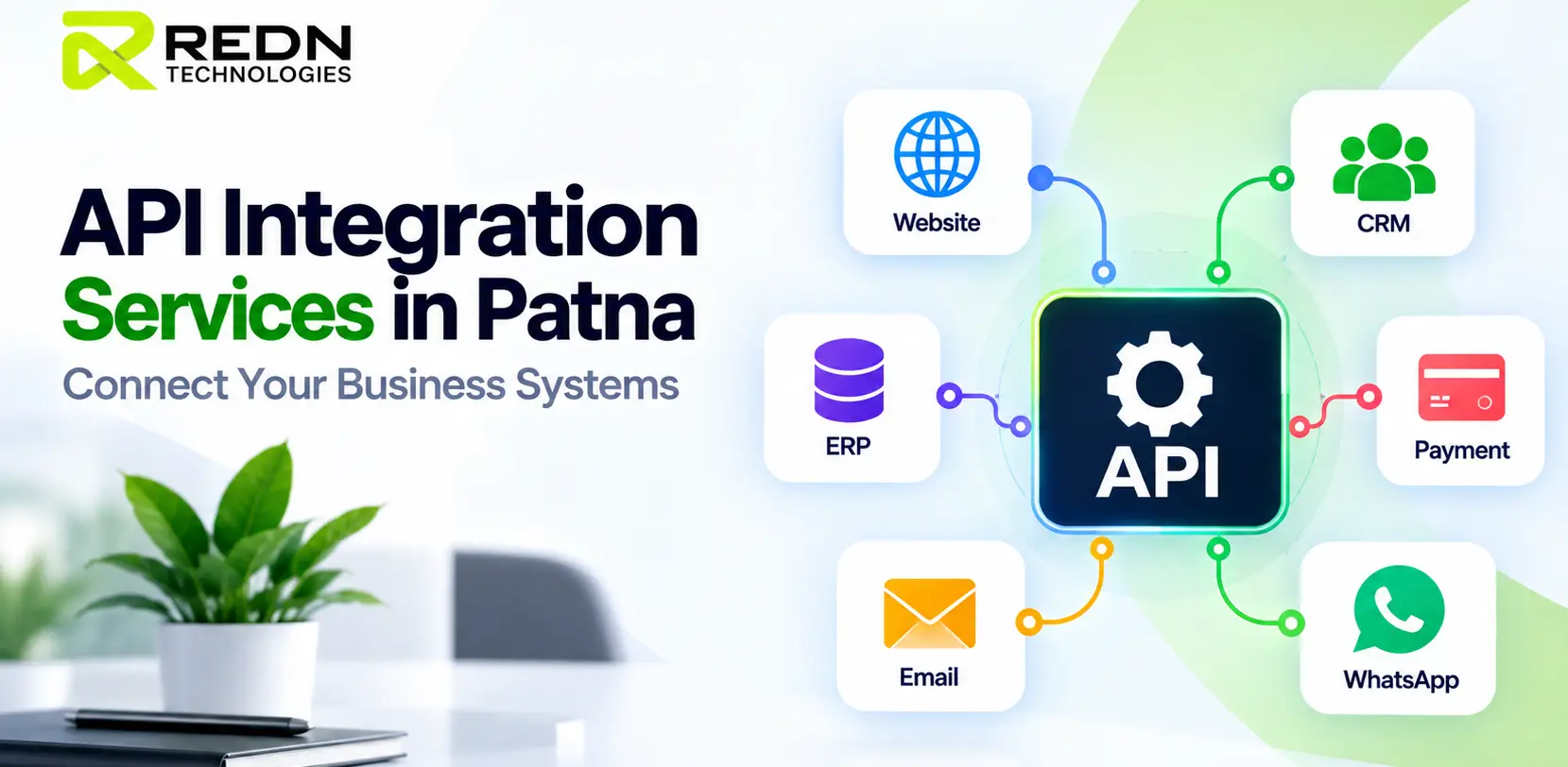
Businesses often use multiple software systems for sales, customer management, billing, payments, inventory and reporting. When these systems work separately, teams may have to enter the same information multiple times. API integration services help businesses connect different applications so data and processes can move between them more efficiently. Redn Technologies provides custom software development and integration solutions for businesses looking to connect websites, CRM, ERP, billing platforms, payment systems and third-party applications.
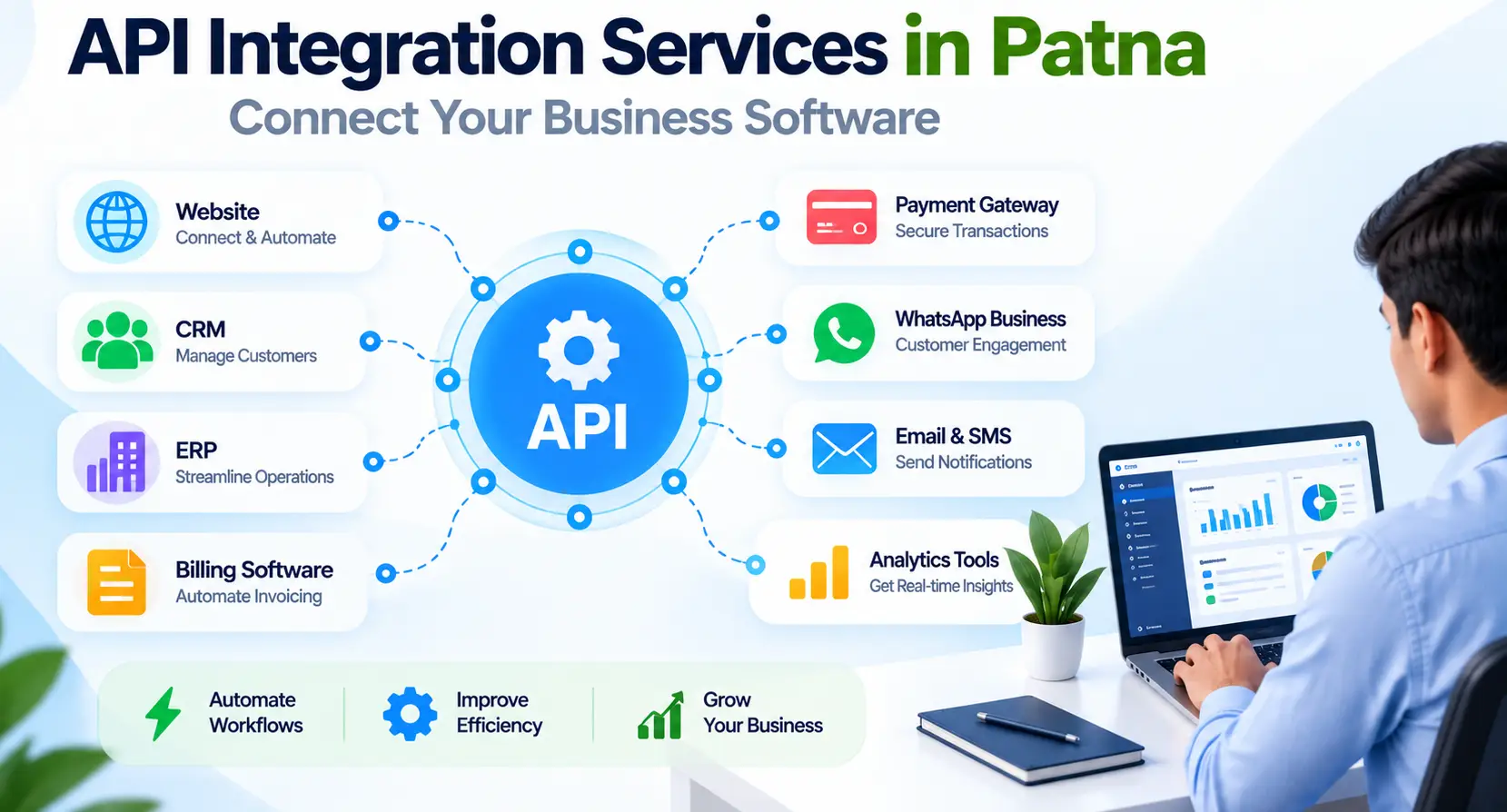
For a basic technical explanation of APIs and how applications communicate, you can also refer to the MDN API documentation.
What Are API Integration Services?
API integration services connect two or more software applications through application programming interfaces, commonly called APIs. An API provides a structured way for one application to request information or perform an action in another application.
For example, an online store may need to send an order to billing software, update inventory in an ERP and receive a payment status from a payment gateway. Instead of manually transferring information between each system, API integration can automate these interactions.
API integration can be developed around existing software or included as part of a new custom software solution. The right approach depends on the applications involved, available APIs, security requirements and the business workflow.
Why Do Businesses Need API Integration?
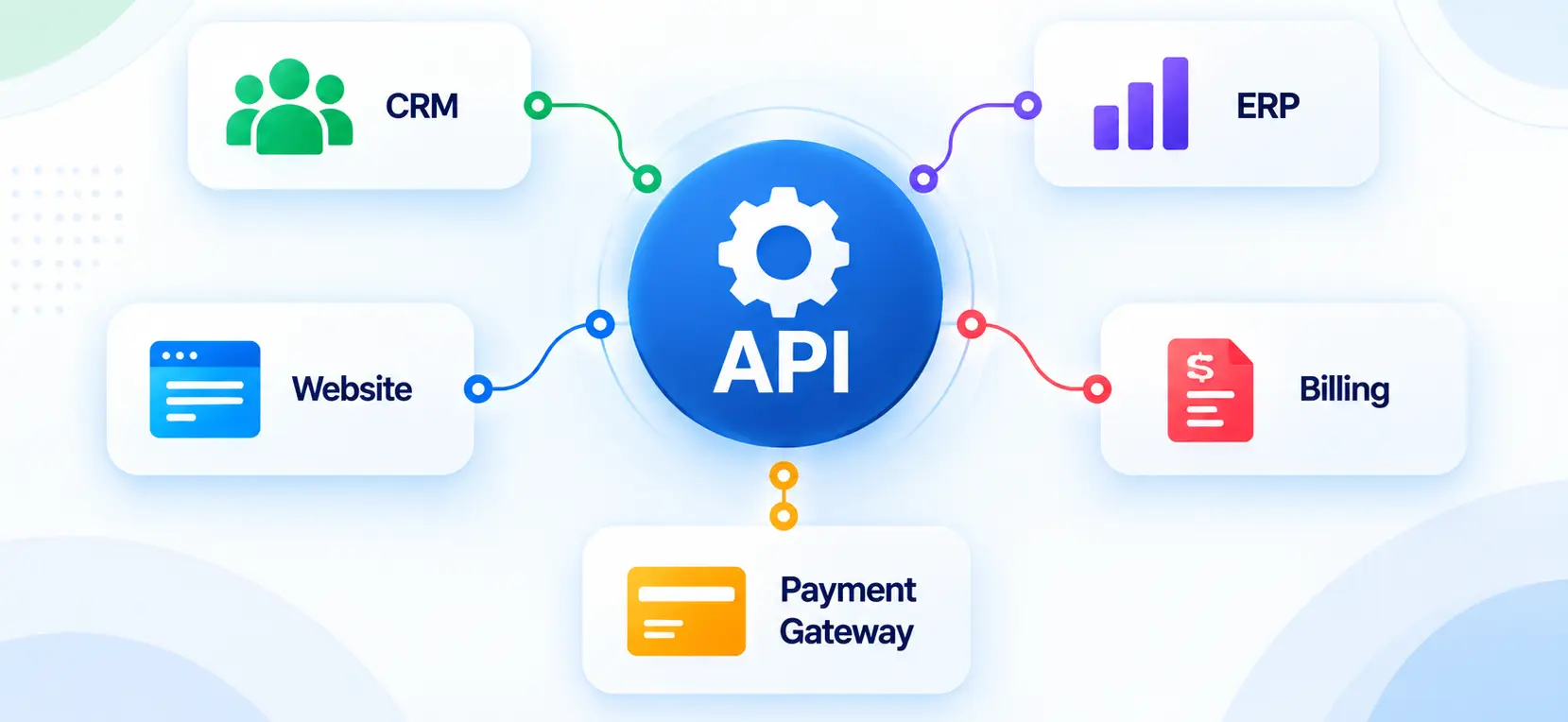
As businesses grow, they often start using different tools for different operations. A CRM may manage leads, an ERP may handle inventory, billing software may generate invoices and a payment gateway may process transactions.
Without integration, employees may need to move information manually between these platforms. This can increase repetitive work and create opportunities for data inconsistencies.
API integration can help create a connected software environment where systems exchange relevant information automatically.
- Reduce repetitive manual data entry
- Synchronize information between connected systems
- Automate repetitive business workflows
- Connect third-party applications with existing software
- Improve access to business information
- Support scalable digital workflows
- Reduce dependency on disconnected software processes
What Can API Integration Connect?
API integration can connect many types of applications depending on the APIs and integration requirements available. Businesses can create connections between internal systems as well as approved third-party platforms.
CRM and ERP Systems
CRM and ERP integration can help synchronize customer, sales, order and operational information. For example, customer information captured through a CRM can be transferred to another connected business system when specific conditions are met.
Websites and Mobile Applications
Websites and mobile applications often depend on APIs to communicate with backend systems. APIs can connect customer-facing applications with databases, CRM platforms, business dashboards, payment services and other software.
Billing and Accounting Software
API integration can connect billing applications with websites, CRM systems, inventory platforms and other business software. This can help automate the movement of order and customer information into billing workflows.
Payment Gateways
Businesses can integrate payment gateways with websites, mobile applications or custom software. A properly designed integration can handle payment requests, transaction responses, payment status and related business workflows.
WhatsApp, SMS and Email Platforms
Communication APIs can connect business software with messaging and notification platforms. This can support automated notifications for leads, orders, appointments, payments, customer updates and other events.
Third-Party Business Applications
Businesses may also need to connect external applications such as analytics tools, marketing platforms, logistics systems or specialized industry software. Third-party API integration can create a connection between these services and the company's existing technology stack.
Types of API Integration Services
Different businesses require different types of integrations. A simple connection between two applications may require a different architecture from a multi-system enterprise workflow.
Custom API Integration
Custom API integration is developed according to the specific requirements of a business. It can be useful when standard integrations do not support the required workflow or when multiple systems need to exchange customized data.
REST API Integration
REST APIs are widely used for communication between web applications and services. REST API integration can allow applications to exchange structured information using standard HTTP requests and responses.
Third-Party API Integration
Third-party API integration connects an existing business application with an external service. Depending on the provider, the integration may involve API keys, OAuth authentication, webhooks, request limits and specific data formats.
Payment API Integration
Payment API integration connects payment services with websites, mobile applications or business software. The implementation should consider authentication, transaction status, error handling, security and reliable payment-response processing.
CRM and ERP Integration
CRM and ERP integration can help businesses create connected workflows between customer-facing and operational systems. Depending on the requirements, information such as customers, leads, orders, products and inventory can be synchronized between platforms.
Data Synchronization
Data synchronization integrations transfer information between systems based on defined rules. Depending on the business requirement, synchronization can happen in real time, through webhooks, at scheduled intervals or when a specific business event occurs.
Benefits of API Integration for Businesses
A well-planned API integration can provide more than simple data transfer. It can become an important part of a company's overall software architecture and business automation strategy.
| Benefit | How It Helps |
|---|---|
| Automation | Automates repetitive information-sharing and workflow tasks. |
| Data Synchronization | Keeps relevant information consistent between connected systems. |
| Reduced Manual Work | Reduces the need to repeatedly enter the same information. |
| Better Workflows | Allows different applications to participate in a connected process. |
| Scalability | Provides a foundation for adding additional software and services as business requirements grow. |
| Improved Visibility | Helps businesses bring relevant information from multiple systems into connected dashboards and processes. |
API Integration Services in Patna
Businesses in Patna may use a combination of websites, custom applications, CRM platforms, ERP systems, billing software and third-party services. Connecting these systems requires an understanding of both the technical API and the actual business workflow.
Redn Technologies' software development services in Patna can be used to build custom business applications and integrations around specific operational requirements. Depending on the project, an integration may connect forms, dashboards, payments, notifications, reports and third-party tools.
For businesses that already have software but need additional integrations, the development process can focus on connecting the existing systems instead of replacing the entire technology stack.
API Integration Development Process
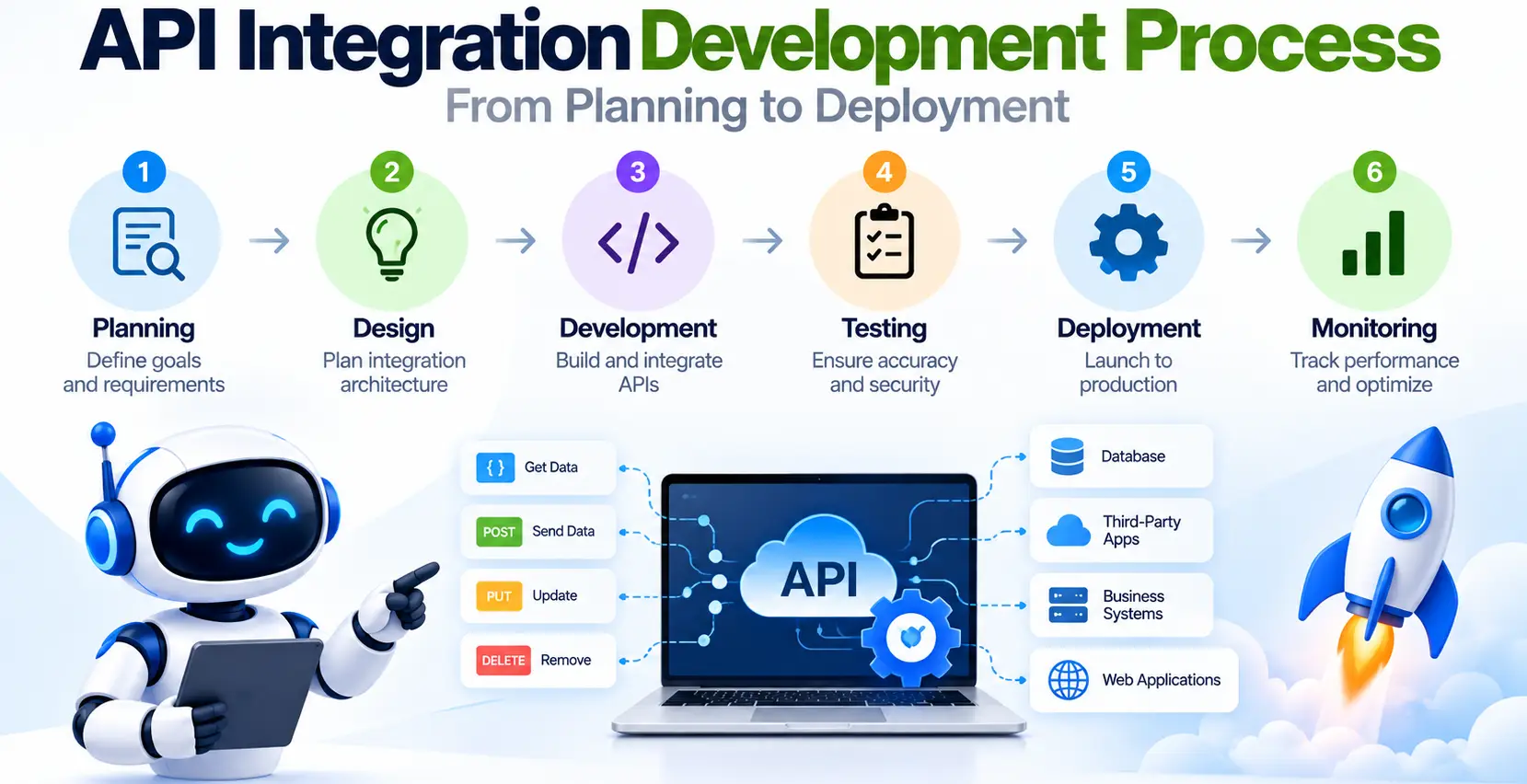
A reliable integration should be planned around business requirements, available APIs, security considerations and future maintenance. A typical API integration project can follow these steps.
1. Requirement Analysis
The first step is understanding which systems need to communicate, what information needs to be transferred and when each integration should be triggered.
2. API and System Analysis
The development team reviews the available API documentation, authentication method, endpoints, request and response formats, webhooks, rate limits and other technical requirements.
3. Integration Planning
The integration architecture is planned around the required data flow. This stage defines which application sends information, which application receives it and how errors or failed requests should be handled.
4. API Development and Integration
Developers implement the required API connections and business logic. Depending on the project, this may involve REST APIs, authentication systems, webhooks, data transformation and custom backend logic.
5. Testing and Error Handling
The integration is tested using different scenarios, including successful requests, invalid data, authentication failures, duplicate requests, API errors and unavailable services.
6. Deployment and Monitoring
After testing, the integration can be deployed to the production environment. Monitoring and logging can help identify failed requests, unexpected responses and other integration issues after deployment.
Important API Integration Considerations
Connecting applications is not only about making one system send data to another. A production-ready integration should also consider security, reliability, scalability and long-term maintenance.
Authentication and Security
APIs may use API keys, tokens, OAuth or other authentication mechanisms. Credentials should be handled securely and should not be unnecessarily exposed in frontend code or public repositories.
Data Validation
Data received from another application should be validated before it is processed or stored. Validation can help prevent incorrect or unexpected information from affecting business workflows.
Error Handling
External APIs can return errors, become temporarily unavailable or change their response. Proper error handling, logging and retry strategies can make an integration more resilient.
API Rate Limits
Some third-party services restrict the number of API requests that can be made within a particular period. Integration architecture should account for these limits to avoid unnecessary failures.
Documentation
Clear documentation makes it easier for developers to understand endpoints, authentication, request formats, response structures and integration dependencies. This becomes especially important when an integration needs future updates.
How Much Do API Integration Services Cost in Patna?
The cost of API integration services in Patna depends on the complexity of the project rather than simply the number of APIs involved. A basic connection between two systems may require considerably less development than a multi-system workflow involving CRM, ERP, billing, payment and communication platforms.
Factors that can affect the development cost include:
- Number of applications being integrated
- Complexity of the APIs
- Authentication and security requirements
- Real-time or scheduled synchronization
- Webhook implementation
- Data transformation requirements
- Custom business logic
- Error handling and retry mechanisms
- Testing requirements
- Monitoring and ongoing maintenance
For an accurate estimate, the integration requirements and existing software architecture should be reviewed before development begins.
How to Choose an API Integration Company in Patna
Choosing an API integration company should involve more than comparing development prices. The development team should understand the business process as well as the technical requirements of the APIs being connected.
- Check experience with custom software and API development.
- Ask how authentication and API credentials will be handled.
- Understand how errors, retries and failed requests will be managed.
- Ask about API documentation and testing procedures.
- Discuss scalability if more systems may be connected later.
- Confirm whether post-launch maintenance and support are available.
If your business needs a custom application along with API integrations, you can explore Redn Technologies software development services or learn more about the company's software development services in Patna.
API Integration vs Manual Data Entry
Manual data entry may be practical for small volumes of information, but it can become inefficient as transaction and customer volumes increase. API integration can automate the movement of information between systems based on predefined rules.
| Manual Process | API-Connected Process |
|---|---|
| Employees transfer information manually | Systems exchange information automatically |
| Repeated data entry | Automated data transfer |
| Higher dependency on manual workflows | More connected business workflows |
| Updates may require multiple system entries | Connected systems can receive relevant updates |
Final Thoughts
API integration can turn disconnected business applications into a more connected digital workflow. From CRM and ERP integration to billing, payments, websites and third-party applications, APIs can help businesses automate the movement of information and reduce repetitive processes.
The right integration strategy depends on your existing software, business requirements, available APIs and future scalability needs. If you are looking for API integration services in Patna, start by identifying the systems that need to communicate, the data that needs to be exchanged and the business processes you want to automate.
To discuss a custom integration requirement, visit the Redn Technologies contact page and share your project requirements with the development team.